SunStation™
Light-powered subsea readout

The SunStation™ never requires batteries, so it can operate in deep water for up to 25 years.
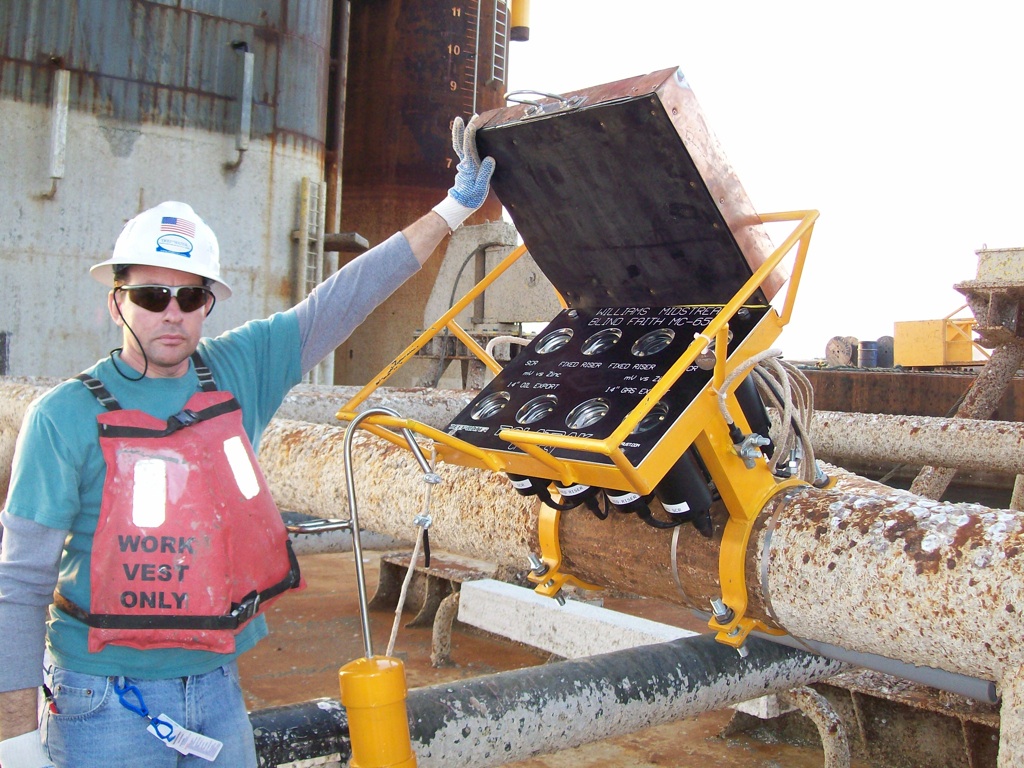
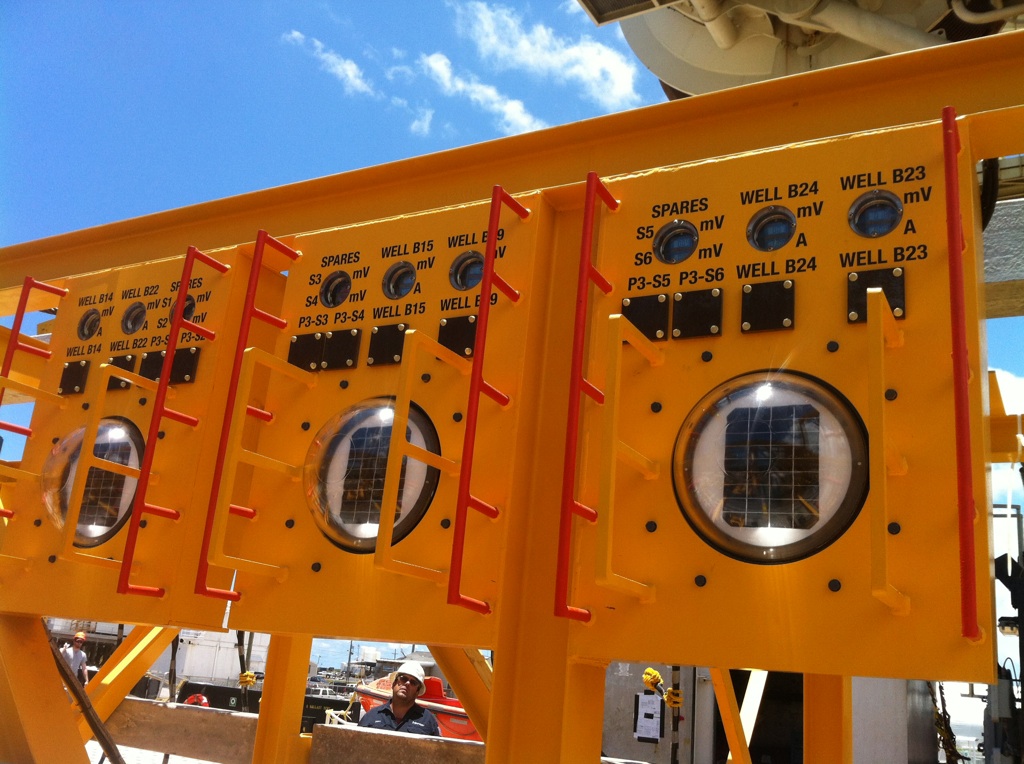
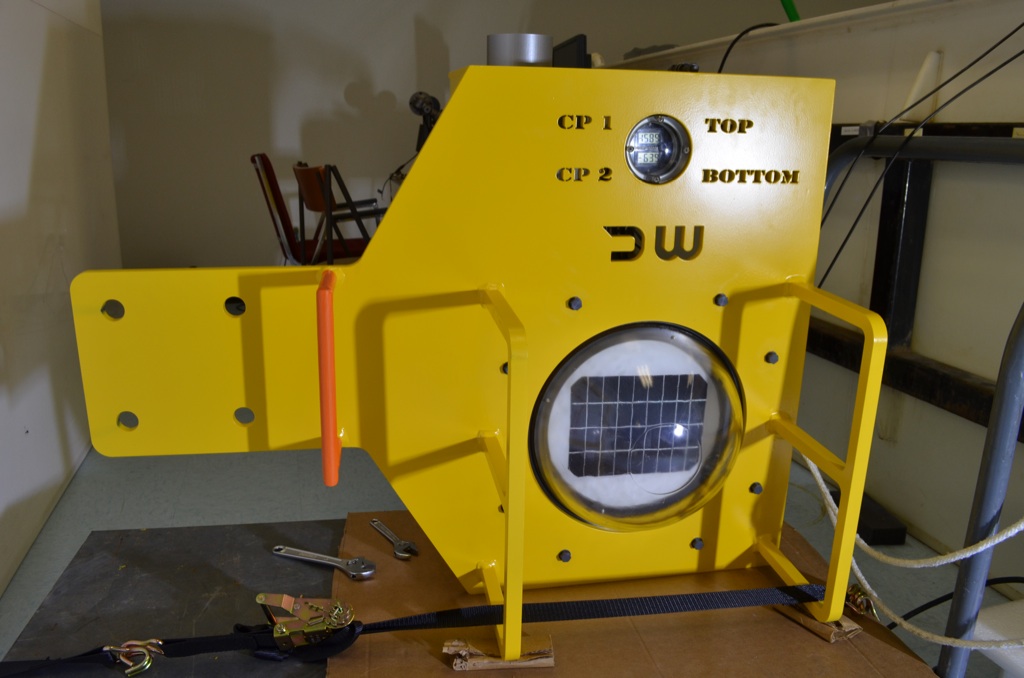
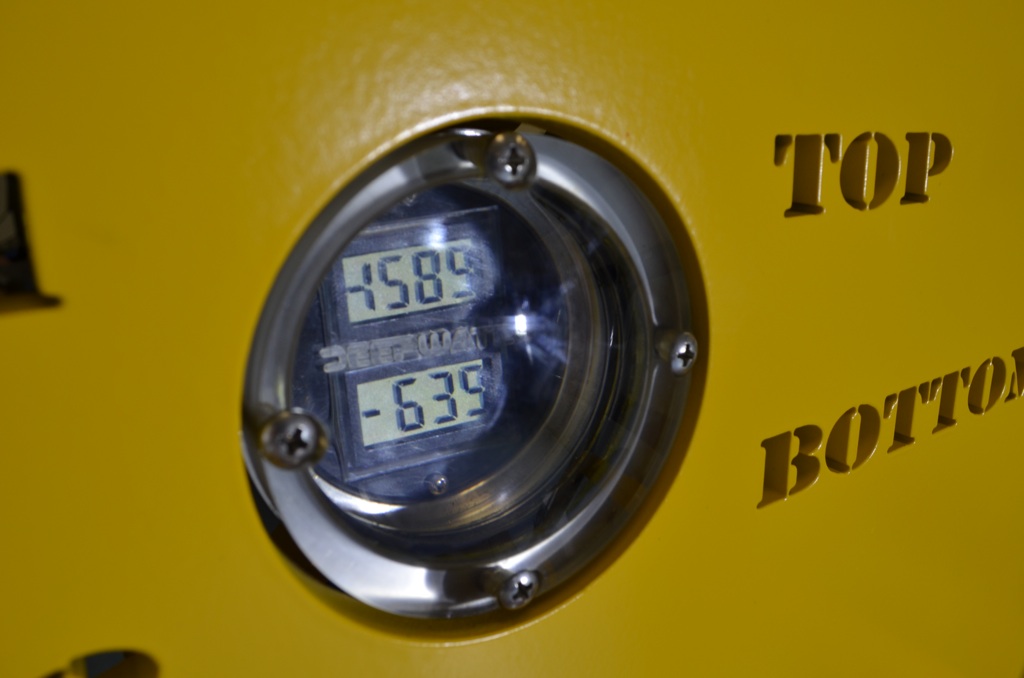
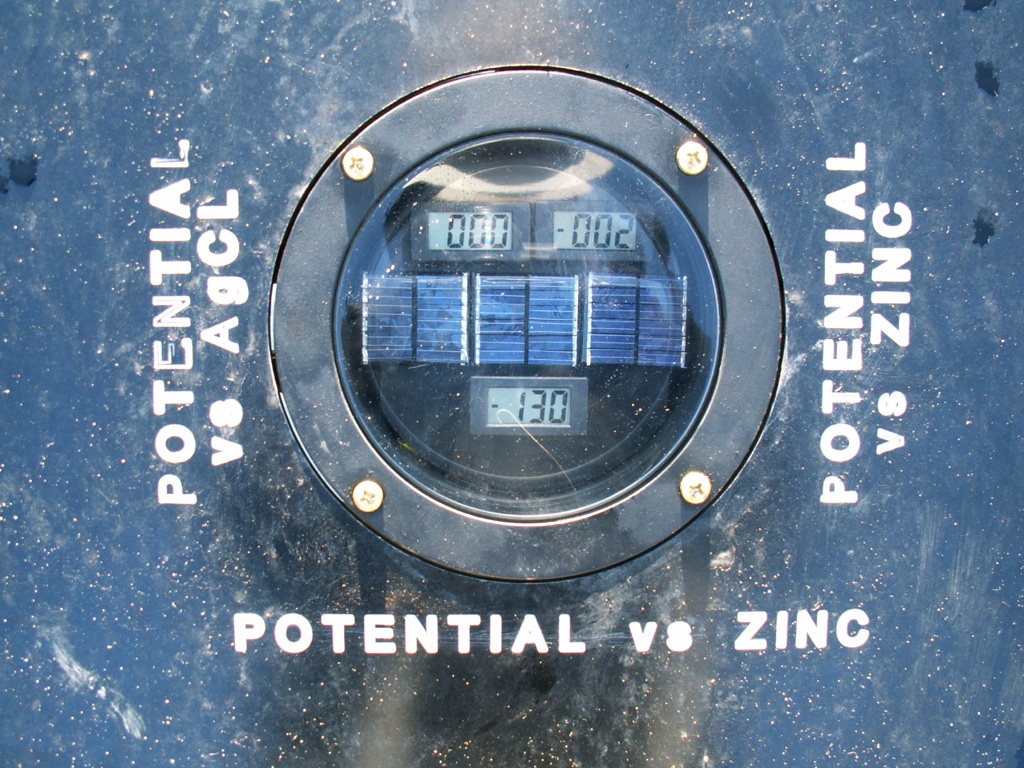
The Polatrak® SunStation™ is a light-powered LED readout system that uses solar panels instead of batteries. It can operate in depths of up to 3,000 meters to display numerical data when activated by a powerful light source.
Deepwater uses the system in conjunction with its line of CP-monitoring instruments to create a unique subsea solution that can be fitted to structures, pipelines and underwater equipment.
Video: SunStation™ installation
Key design points

Reliable CP measurements
The SunStation™ provides accurate data and eliminates the operator error associated with many CP probes. Fixed instruments don't suffer the same calibration problems as portable devices. Because each unit has its own reference ground, the SunStation™ provides real-time verification of electrical continuity or isolation.

Eliminate probe hassle
The reference electrodes connected to the SunStation™ readout can be placed in critical locations on the asset where an external probe placement would be impossible. By requiring only the ROV's video camera for a survey, the system reduces cost and eliminates the wear and tear on ROV systems associated with stabbing CP probes.

Consolidate surveys
With a SunStation™ system in place, the operator leverages an ROV's presence by providing CP status during any intervention. ROV visits are documented by video, so cathodic protection surveys can be carried out any time an ROV is in the area.

Rapid retrofit with RetroClamp™
The SunStation™ can be attached to existing structures and fields with a specially-modified Retroclamp™. The clamp can be attached by diver or ROV to any flange or tubular member,
Lights, camera, inspection
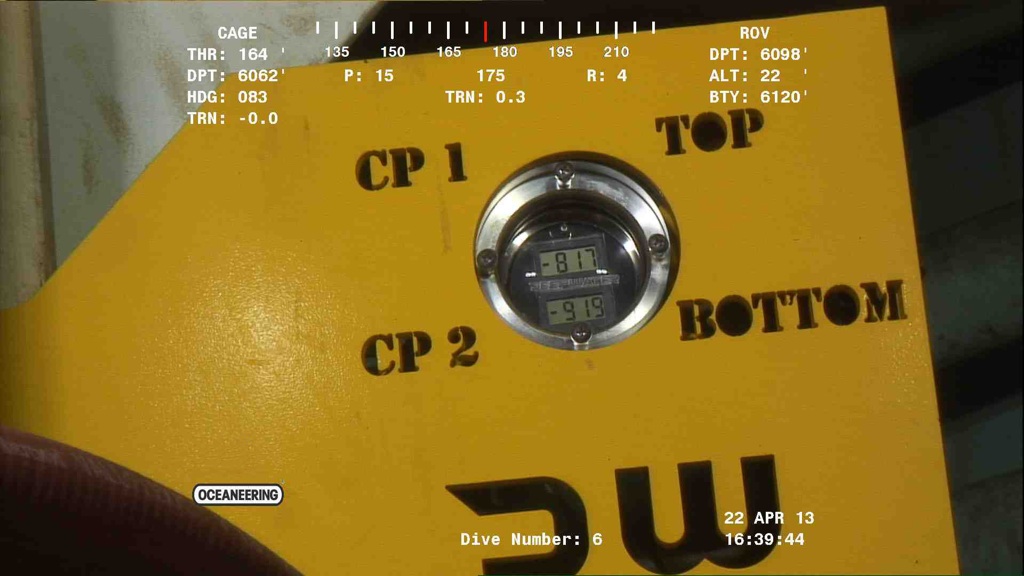
Any class of ROV with a camera and light can record CP potentials, and no additional survey equipment or ROV probes are required.
Since SunStation™ requires only visual inspection, a specially-qualified inspector is no longer necessary offshore.
The most common instruments used with the SunStation™ are reference electrodes and current-density monitors that allow asset owners to track the performance of anodes. These electrodes are permanently mounted to the asset and wired to the readouts, which can be placed in ROV-friendly areas.

SunStation gallery
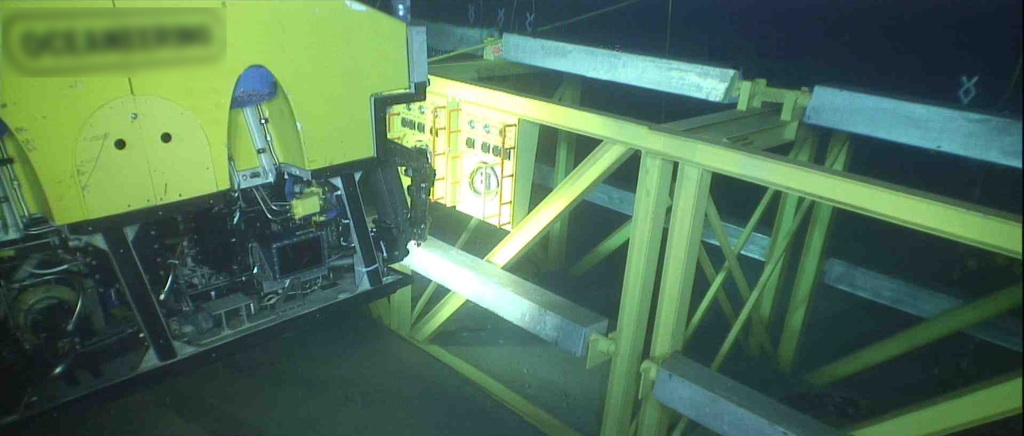
Powered by light
SunStation™ requires no battery, since it is activated by the light of the ROV.
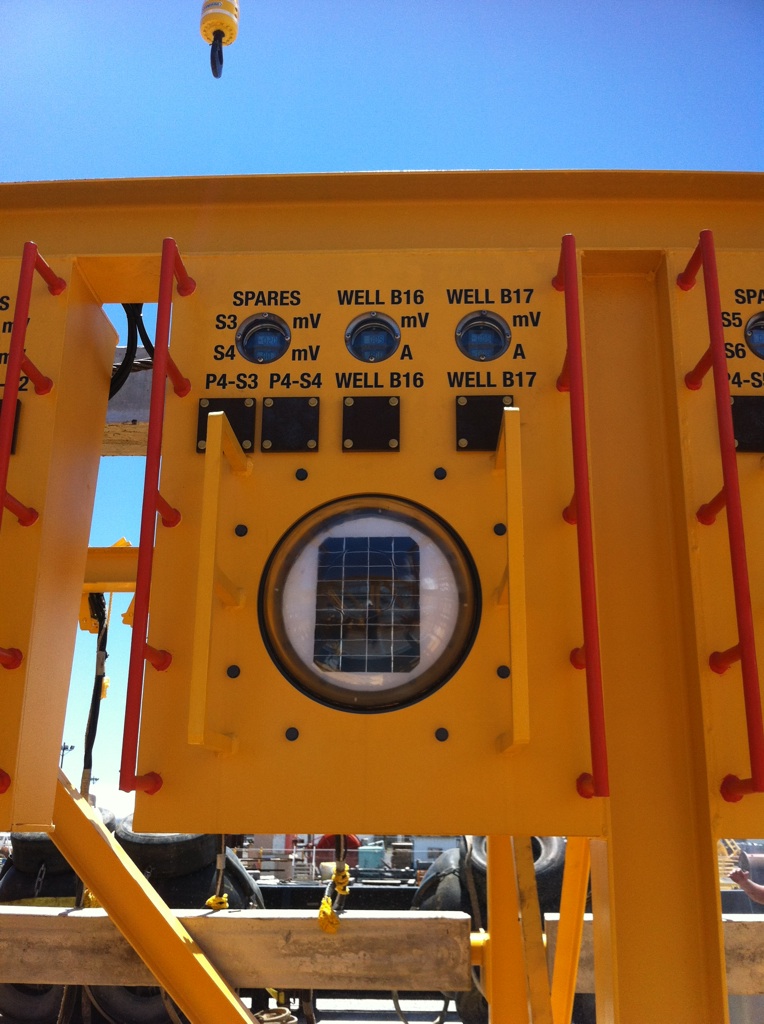
Depth rated
The SunStation™ housings and electrodes are rated to depths of 3000m.
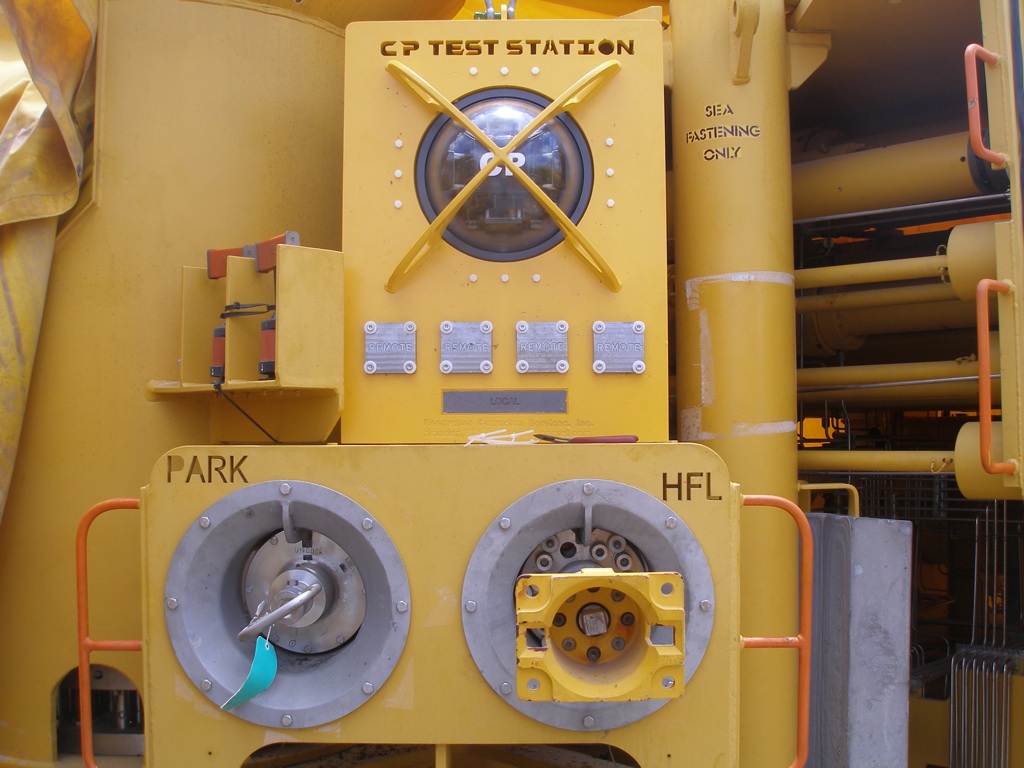
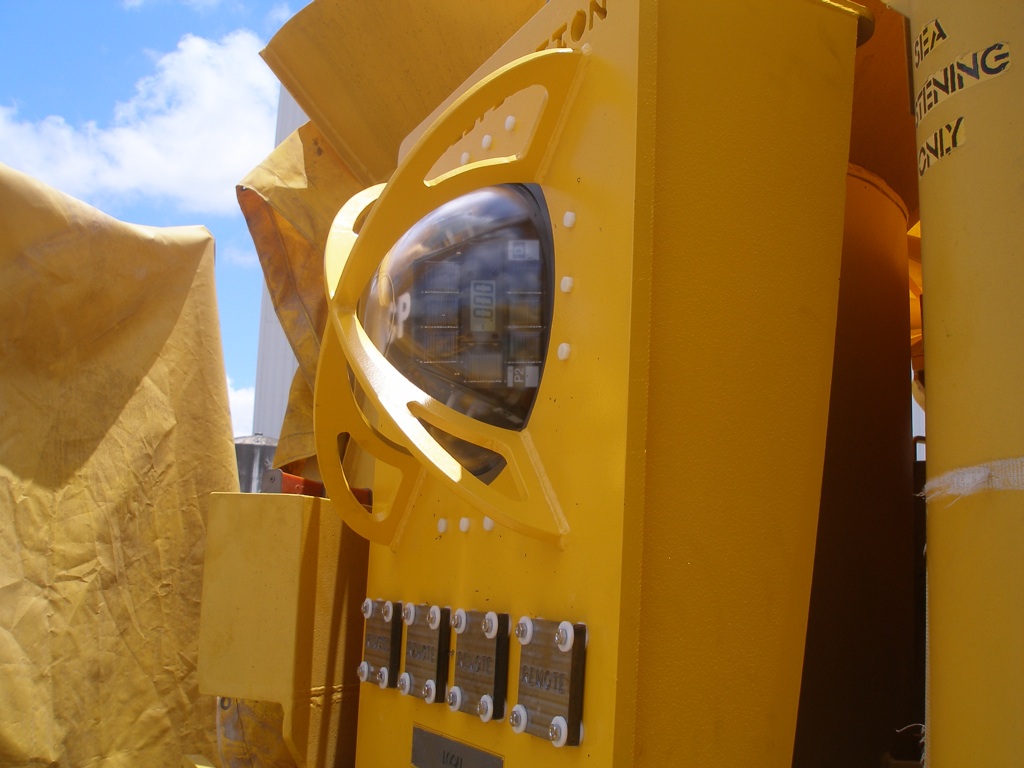
CP survey
SunStation™ allows any passing ROV to conduct a CP survey simply by lighting up the readout and recording an image.
25-40 Year life
The robust pressure housings around the array of solar panels and readouts ensure that the SunStation™ can last for up to 45 years.
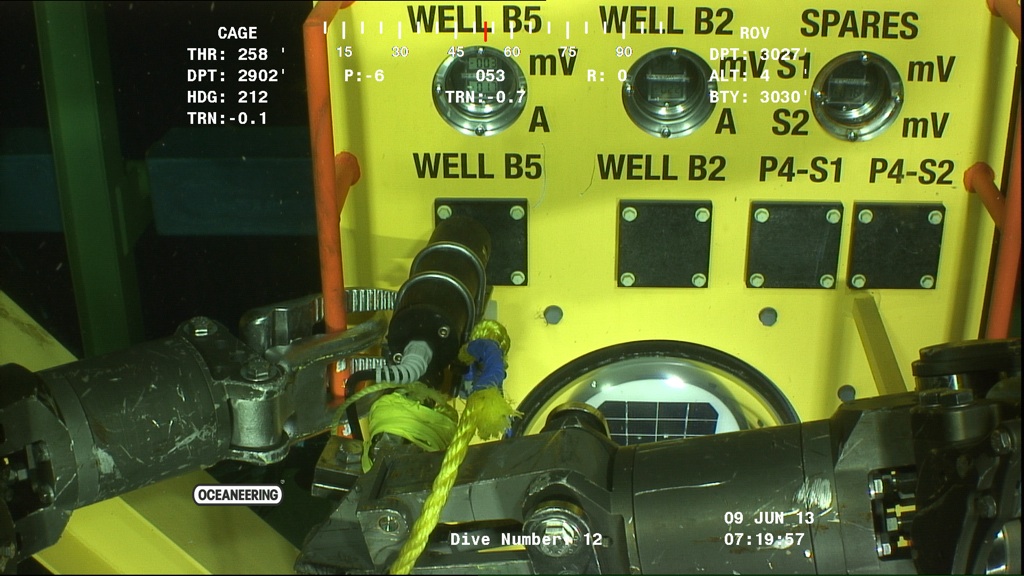
Stab calibration test
SunStation™ must be tested with a traditional stab probe when installed. The stab points remain to verify that electrodes are calibrated.
Related content
Spotlight

Related products & experience


Technical papers


